Inside the Panel Simulator: What a Live AI Mock Interview Actually Looks Like
The Panel Simulator runs a real-time mock interview with a three-member AI panel, scores each answer 1–5 on the APS merit scale, and produces a formal debrief report. Here's exactly how it works.
The gap between knowing how to write a STAR story and being able to deliver one under panel conditions is wider than most candidates expect. You can have a technically correct answer on paper and still score 2/5 in the room — because you answered the wrong question, ran too long, or drifted from the criterion being assessed.
The Panel Simulator is built for that gap. It's a live, multi-turn mock interview with an AI panel that behaves the way actual APS panels do: it asks follow-up questions when your answer is thin, scores you in real time, and gives you a formal debrief at the end.
Setting Up Your Session
Before the interview starts, you configure three things: the selection criteria from the job advertisement (paste them directly from the JD), your target APS band, and optionally the hiring agency.
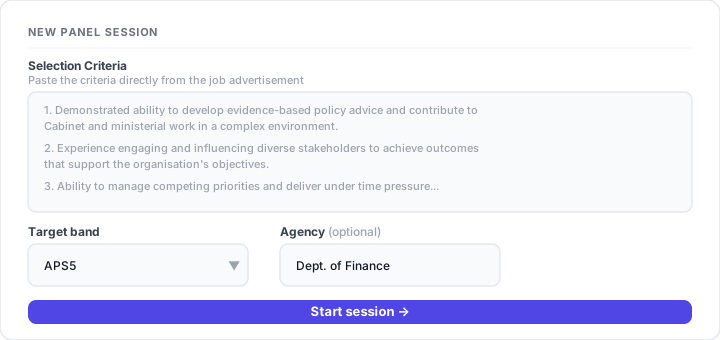
The criteria you paste become the interview structure. Each criterion gets its own question in the session — the same way an actual APS panel interview works.
The Interview Session
Once you start, the session opens as a live conversation. The panel chair asks the first question — drawn from your first criterion, phrased the way a real APS panel member would ask it.
You type your response. There's no time pressure and no word limit — answer the way you would in the room.
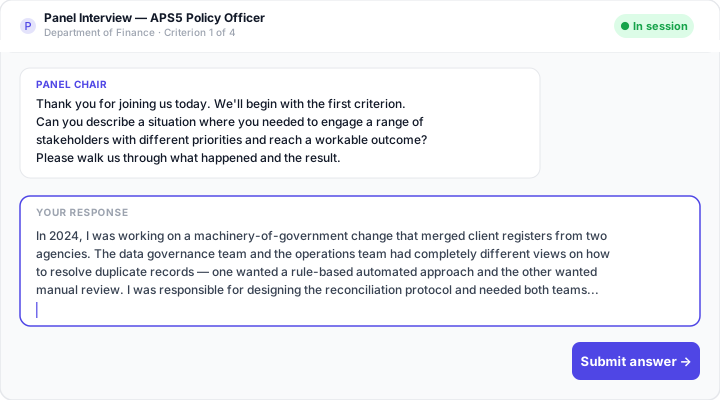
The panel chair reads your answer and responds. Two things happen next, depending on what you said:
If your answer was complete and specific: The chair acknowledges it, briefly notes what was strong, and moves on to the next criterion.
If your answer was vague or missing STAR elements: The chair asks a targeted follow-up — exactly the kind of probing question a real panel would ask. "You mentioned you led the project — can you tell us specifically what that involved?" or "What was the result for the organisation?"
Real-Time Scoring
Every answer you give is scored 1–5 on the APS merit scale:
| Score | What it means |
|---|---|
| 1 | Unsatisfactory — no credible evidence; too vague or describes what others did |
| 2 | Below expectation — some evidence but insufficient depth; key STAR elements missing |
| 3 | Meets expectation — clear evidence, all STAR elements present, appropriate scope for band |
| 4 | Exceeds expectation — strong, specific, measurable outcomes, good judgment demonstrated |
| 5 | Outstanding — exceptional evidence, mastery at or above target band level |
The score appears after each answer, along with the assessor's internal notes — the kind of comments a panel member would write on their scoring sheet during the interview.
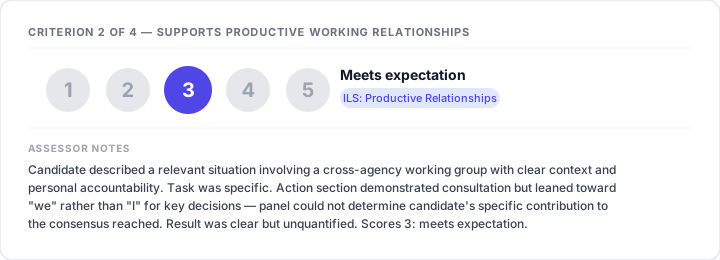
These notes are the most useful part of real-time feedback. Not "good job" or "needs work" — specific observations like: "Candidate described a relevant situation and task clearly. Action section was too brief — described the outcome of a decision rather than the decision-making process itself. Result was quantified. Missing: what specific steps the candidate personally took."
Follow-Up Questions
When your answer scores below a 3, the panel follows up. This is intentional — real panels do the same thing. A 2/5 answer often has the right experience underneath it; the panel member just couldn't see it because the candidate described team activity instead of individual contribution.
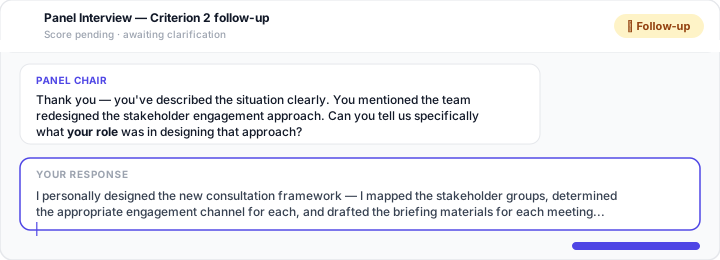
The follow-up is specific to what was missing. If your situation was clear but your action was vague, the follow-up targets the action. If you said "we" throughout when the panel needed to see "I", the follow-up asks you to clarify your personal contribution.
Your follow-up response is scored separately and incorporated into the criterion's overall assessment.
Working Through All Criteria
The session continues criterion by criterion until all have been assessed. Most APS panel interviews cover 3–5 criteria; the simulator follows the same structure, asking one question per criterion and following up where needed.

You can see your running scores as the session progresses, but the full debrief only appears after all criteria are complete.
The Debrief Report
When the final criterion is assessed, the panel produces a formal debrief report — structured the way a real post-interview debrief is structured.
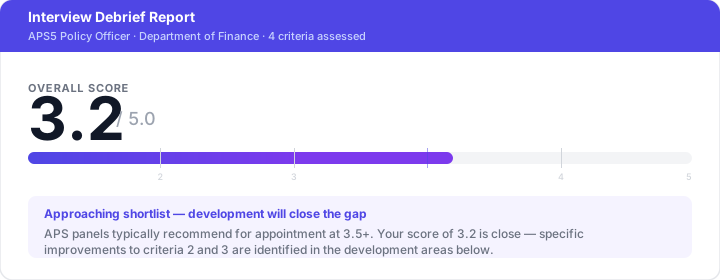
Overall score — the mean across all criteria, expressed as a decimal (e.g., 3.2/5). APS panels typically recommend for appointment at 3.5+ on a five-point scale.
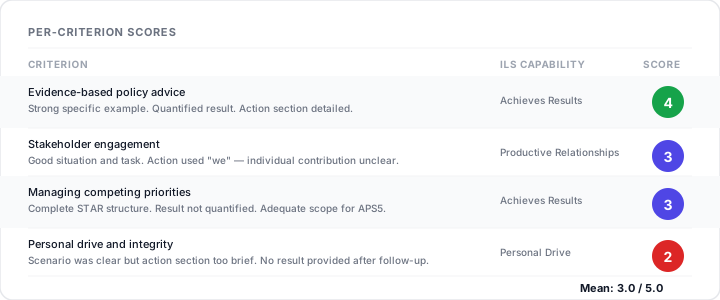
Per-criterion breakdown — each criterion's score, the ILS capability it assessed, and the panel's specific notes on that answer.
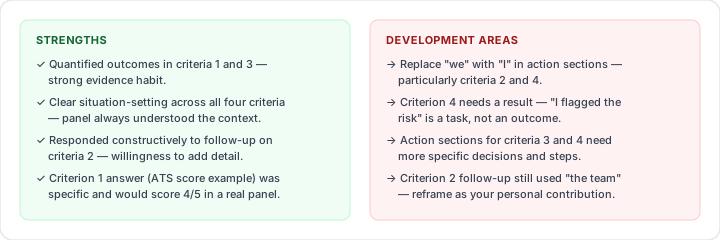
Strengths — 2–4 specific things you did well, drawn from the actual transcript. Not generic praise — observations like: "Consistently quantified outcomes across three of four criteria. Strong use of personal 'I' language in the action sections."
Development areas — 2–4 specific areas to work on, framed constructively. The panel doesn't tell you that you failed — it tells you what needs to change before your next attempt.
Recommended practice — 2–4 concrete steps to take before your next mock or real interview. Specific to what the transcript revealed, not generic interview advice.
Running It Again
The value of the simulator comes from repetition. Your first session reveals your actual weaknesses — not the ones you thought you had. Your second session, after working on the specific gaps the debrief identified, shows measurable improvement.
Most candidates see their score increase by 0.5–1.0 points between their first and second session on the same criteria. That's the difference between "below expectation" and "meets expectation", or between "meets" and "exceeds" — meaningful movement on a five-point scale.
All previous sessions are saved to your account. You can review past debriefs, compare scores across sessions, and track which ILS capabilities you're strongest on.
Who It's For
The Panel Simulator is for candidates who have already prepared their stories and want to pressure-test them before the real thing. If you've written your STAR stories, done your research on the role, and think you're ready — the simulator will tell you honestly whether you are, and exactly what to fix if you're not.
It's also useful as a warmup before an actual interview: running through your criteria the day before surfaces gaps your conscious mind has glossed over during written preparation.
Ready to put this into practice?
Role Ascent optimises your resume, builds STAR stories, and prepares you for panel interviews — tailored to the exact job description. Try every tool free, no card required.
Try every tool free →Role Ascent Team
Writing about APS careers, interview preparation, and resume strategy for Australian Public Service applicants.
Related articles